Uncategorized
Optical audio cables: Why TOSLINK technology still matters for…
Discover why optical audio cables remain essential for home entertainment. Learn about TOSLINK technology, benefits, and how to choose the right cable for your setup.
Why an Optical Audio Cable Still Matters for Modern Home Entertainment
Even as wireless streaming and HDMI eARC dominate marketing conversations, a huge share of televisions, soundbars, and game consoles still rely on a simple beam of light to move digital audio between devices. An optical audio cable transmits sound using light pulses rather than electrical current, which means it stays completely unaffected by electromagnetic or radio-frequency interference. This matters in cluttered media cabinets where power adapters, routers, and multiple devices sit within inches of each other. For anyone who has dealt with a faint buzz or hum coming from speakers, this format offers a straightforward fix rooted in physics rather than trial and error.
The technology also sidesteps ground loop issues that often plague analog and coaxial digital connections. Because the connection is galvanically isolated, there's no shared electrical path between the source and the receiving device, which eliminates a common cause of background noise in home theater setups. This makes the format a reliable choice for connecting a TV to an external soundbar or a legacy CD player to a modern DAC. While newer formats have taken over the high-bandwidth, object-based audio space, the optical connection remains a dependable backup that just works without configuration menus or firmware updates.
Kácsa Audió: Crafting TOSLINK Solutions Tailored to Your Setup
Not every listening environment calls for the same cable, and that's the starting point for how Kácsa Audió approaches its optical lineup. Rather than offering a single generic product, the company distributes cables assembled by established manufacturers alongside custom builds designed around a customer's specific room layout, connector angle, or length requirement. This flexibility matters for anyone dealing with a wall-mounted TV with limited rear clearance or a rack system where standard cable lengths simply don't fit. The result is a catalog that spans basic PVC-jacketed options through to high-end fiber constructions with thousands of individual optical strands.
What sets the buying experience apart is the guidance built into the process. The team doesn't just process orders — it helps customers figure out which conductor diameter, connector finish, or jacket material suits their gear, drawing on direct feedback from previous buyers. Every assembled cable can also be tested at home, in the customer's own system, before any purchase commitment is made. That kind of hands-on verification is rare in the cable market, where specifications on a page rarely tell the whole story about real-world performance.
Choosing the Right Optical Audio Cable: Features, Benefits, and Buying Tips
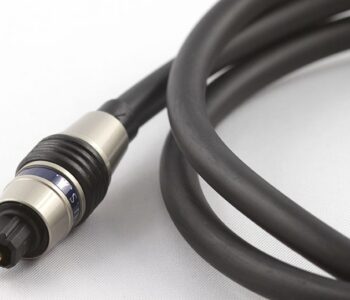
Selecting the right cable starts with understanding the core material running through it. Entry-level options typically use plastic optical fiber (POF), which handles standard living-room distances without issue, while glass-fiber constructions are built for longer runs or setups where signal integrity over distance becomes a priority. Buyers should also consider the connector type: full-size TOSLINK plugs cover the vast majority of TVs, AV receivers, and consoles, while mini-TOSLINK or 3.5mm optical adapters are necessary for laptops and portable players that use a compact port. Jacket material is another practical factor — a flexible, bend-resistant sleeve prevents the fiber inside from cracking when routed around tight corners behind furniture.
Beyond materials, it helps to think about what the cable actually needs to carry. Standard PCM stereo and common surround formats like Dolby Digital pass through an optical connection without any loss, making it a solid match for most soundbar and DAC setups. Length matters too — longer runs sometimes benefit from thicker fiber cores to maintain signal clarity, which is why several product lines offer the same cable in varying diameters depending on distance. Anyone comparing options should also check connector plating, since gold-plated barrels resist corrosion better over years of plugging and unplugging than uncoated alternatives.
What's Next for Optical Audio Cable Technology in a Wireless-Dominated World
Wireless audio has taken over a large portion of casual listening, but the optical connection continues to hold its ground in scenarios where a stable, uncompressed digital link matters more than convenience. Gaming consoles, older AV receivers, and dedicated stereo DACs frequently lack modern HDMI eARC support, which keeps the optical port relevant on the back panel of new equipment year after year. Manufacturers have responded not by abandoning the format but by refining it — offering thinner, more flexible cables, 90-degree connectors for tight spaces, and improved fiber counts that reduce jitter on longer runs.
The plug-and-play nature of the connection also explains why it hasn't disappeared alongside other legacy formats. Unlike HDMI, which depends on handshake protocols that can occasionally cause compatibility hiccups between brands, an optical audio cable simply carries the signal without any negotiation between devices. That reliability appeals to users who want their soundbar or DAC to work identically every time it's powered on, without troubleshooting a dropped connection. As long as legacy equipment remains in active use and manufacturers keep including optical ports as a fallback option, this decades-old format will keep earning its spot in home entertainment setups.