 Uncategorized
 Optical audio cable quality: why Kácsa Audió’s custom solutions…
Discover why optical audio cable quality transforms your sound. Learn key factors, connector specs, and how Kácsa Audió delivers premium custom solutions.
Why Optical Audio Cable Quality Matters More Than You Think
When audiophiles discuss signal transmission, the physical medium carrying the signal often gets overlooked — yet it plays a measurable role in the final sound. A high-quality optical audio cable transmits digital audio as pulses of light, which theoretically eliminates electromagnetic interference entirely. However, the purity of the fiber, the precision of the polished connector ends, and the way light disperses inside the cable can introduce what engineers call jitter — small timing errors that degrade sound quality. Even in a system where the source and the DAC are both top-tier, a poorly made cable can quietly undermine the listening experience.
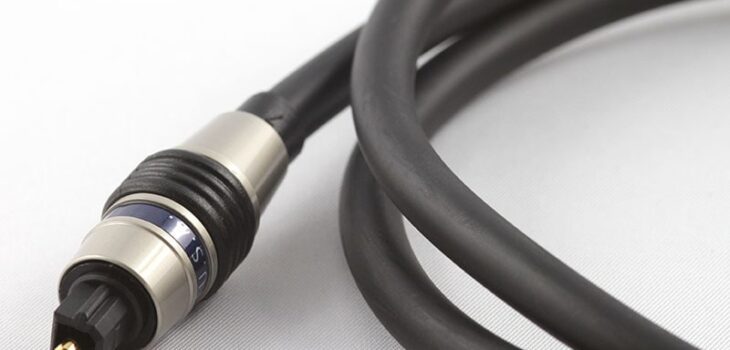
The connector interface is another critical factor many buyers ignore. Toslink connectors, the standard optical termination, vary significantly in build quality: poorly molded plastic housings allow micro-vibrations, while metal-barreled designs — such as those finished with 24K gold-plated connectors — maintain a more stable optical path. Fiber strand count also influences how cleanly the light pulse travels, with high-strand-count conductors distributing the signal more evenly across the fiber cross-section. These technical differences translate directly into a more stable digital signal reaching your amplifier or DAC.
How Kácsa Audió Delivers Premium Optical Audio Cables Tailored to Your Needs
Kácsa Audió has built its reputation on something relatively rare in the cable retail space: the willingness to assemble cables to individual customer specifications rather than relying solely on off-the-shelf products. Their catalog ranges from accessible entry-level options in the KáCsa Basic Line to high-end AudioQuest configurations featuring 217 narrow-aperture synthetic fiber conductors, covering a wide spectrum of use cases and system requirements. Customers can request custom lengths and configurations, ensuring that the cable fits the installation — not the other way around.
What further distinguishes this approach is that the buying process doesn't end at checkout. The team provides professional guidance, handles assembly in-house, and conducts testing as part of the standard service. Perhaps most notably, every assembled cable can be evaluated at home, in the buyer's own audio system, before any purchase commitment is made — a policy that reflects genuine confidence in the products they stock and build.
Choosing the Right Optical Audio Cable: Key Factors Every Audiophile Should Consider
Selecting the right optical audio cable comes down to a few well-defined technical parameters. Fiber type and strand count matter most: a cable using a single low-quality plastic fiber will behave very differently from one built with 19 or more narrow-aperture synthetic fibers, each contributing to lower light dispersion and reduced jitter. Connector quality is equally important — precision-polished fiber ends and robust housings that maintain consistent contact with the device port are features worth examining before any purchase.
Cable length is a practical consideration that also affects performance. Optical signals can degrade over longer runs, making it worth investing in a higher-specification cable when the distance between components exceeds two or three meters. For in-wall installations, an outer jacket rated for that purpose is not optional — it is essential for long-term reliability. Matching the cable's specification to the actual demands of the system, rather than simply choosing the most expensive option available, consistently delivers the best results.
The Future of Optical Audio Transmission: Trends Shaping High-Fidelity Sound
Optical audio transmission continues to evolve alongside the broader shift toward high-resolution digital formats. As streaming platforms increasingly offer lossless and hi-res audio content, the demand for cables capable of handling these signals without introducing artifacts has grown noticeably. The Toslink standard, while decades old, remains widely implemented across amplifiers, soundbars, televisions, and dedicated DACs — making optical connections far from a legacy technology. Engineers continue to push performance within the format through advances in fiber purity and tighter connector tolerances.
There is also a growing awareness among listeners that the entire signal chain — not just the hardware components — shapes the final listening experience. This includes the optical audio cable, a component that is often the last to be upgraded but can have a real impact on signal timing and clarity. Manufacturers respond by developing fiber technology with lower dispersion characteristics and more consistent manufacturing standards, reinforcing the principle that even a passive digital connection carries more influence over sound quality than it might first appear.